Projects

Since our foundation in March 2005, Cross Cultural Bridges has carried out many impactful activities, projects, and programs in South America and Europe. The first initiative took place in the Netherlands, aiming to strengthen connections between different cultures through work with mixed couples. In Bolivia, CCB organized several activities addressing conflicts that affected indigenous communities. Other highlights include an exchange project with schools in the Netherlands, Bolivia, Peru, and Guatemala, as well as a program involving twenty indigenous youth leaders from eight Amazon countries. Furthermore, since 2009 we have promoted the production and consumption of local food and the practice of sustainable, regenerative agriculture. In Europe, CCB established a youth community that connects young people from nine EU countries. Since 2020, we have actively supported efforts related to the Rights of Nature. This timeline provides an overview of the history of our activities: 

https://canva.link/u928in978jmd2zw 

Current programmes: 

  1. Good Life Path Project 
  2. U4EU 
  3. Mobile Chocolate School 
  4. Soil for Life 
  5. Rights of Nature 
  6. Earth Stories 
  7. Buen Vivir in the Czaar Peter neighbourhood 
  8. International Chocolate School 
  9. The Higuerones project in Costa Rica 

Good Life Path Project

This project for young people began in 2023 and focuses on applying the concept of “Good Living” (Buen Vivir) in their personal and professional lives. It consists of annual gatherings for all participants, complemented by regional and online meetings, and includes intergenerational buddy matches. Participants explore how they can integrate Good Living into their daily lives in ways that also benefit their communities. The project is rooted in a collaborative spirit, with the intention that participants gain practical benefits as well. Concrete plans are encouraged and supported. Each meeting also provides ample time for relaxation alongside the more intensive activities.

Youth Debating the Future of Europe (U4EU)

The project aims to encourage democratic and civic participation among young citizens from Greece, Bulgaria, Spain, Italy, Germany, Belgium, Hungary, Portugal, and the Netherlands. The first phase was funded by the Europe for Citizens Programme of the EU and consisted of seven activities held between March 2020 and September 2022 across nine countries. These activities gave participants the opportunity to express their concerns about common challenges related to European identity, diversity, and the future of Europe. The second phase “Youth Shaping EU’s Tomorrow” (U4EU 2.0) built on the achievements of the initial project by moving from collecting views to fostering tangible actions and policy engagement. This phase was implemented from May 2024 to April 2026 and was co-funded by the CERV Programme of the European Union. The final activity of U4EU 2.0 took place in March 2026. Thanks to the successful cooperation among the nine countries since 2020, the coalition has now developed into an active network that continues to collaborate on several joint initiatives. 

Video produced by CCB for “Youth Debating the Future of Europe” (U4EU): https://www.youtube.com/watch?v=gItrcm1mZXw&t=313s 

Video produced by CCB for “Youth Shaping EU’s Tomorrow” (U4EU 2.0): https://www.youtube.com/watch?v=6IJW9XTYmdc&t=15s 

The Mobile Chocolate School

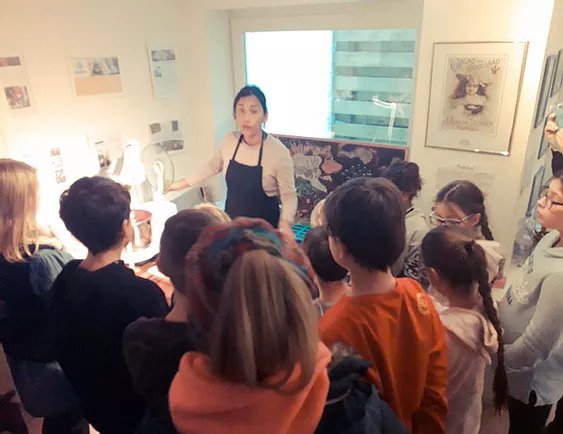
Since 2019, the Mobile Chocolate School has educated students between the ages of 6 and 24 about where our food comes from in a creative, interactive, fair, sustainable, crafty, tasty, and healthy way. The Mobile Chocolate School visits schools throughout the Netherlands or welcomes groups to the Cacaomuseum for half-day, full-day, or longer learning trajectories, with an emphasis on topics such as sustainability, fair working conditions, healthy and tasty food, and transparency (where cocoa comes from and who the farmers are). These sessions also include plenty of fun in making, and eating chocolate, while fostering understanding, exchange, and respect among children from different cultures. Learning is participatory and creative, engaging all the senses in the process. Since 2019, hundreds of students aged 4 to 24 have enthusiastically taken part in these activities. By March 2026, a total of 5,704 students had participated in the project. There is also the possibility of organizing exchanges with children from cocoa-producing countries through Skype and other communication platforms. 

Soil for Life

Soil for Life – A Gender-Responsive Approach to Soil Improvement through Regenerative Agriculture is a project dedicated to exploring both the opportunities and limitations of regenerative agriculture in improving and protecting soil quality. The project examines how regenerative practices influence soil health, particularly in contrast to conventional agriculture, which often disrupts the complex living systems beneath the surface. Soil for Life organizes a series of online sessions alongside an in-person weekend gathering in June 2026 at a food forest and market garden setting (Eetmeerbosch, Nijmegen). Another component of the project is the creation and implementation of a Living Lab: a collaborative space where participants experiment, learn, and co-create knowledge about regenerative soil practices in real-world conditions. Through research, education, dialogue, and action, Soil for Life aims to cultivate not only healthier soils but also more inclusive perspectives and sustainable futures. The project participants are young people, preferably with a rural background. Soil for Life is part of the EU-funded Rural Voices 2030 programme, Engaging Young Rural European Citizens in a Gender-Responsive Approach to Soil Protection, and is coordinated by the Slow Food Youth Network. 

Rights of Nature

Cross Cultural Bridges began working on the Rights of Nature as a natural extension of its long-standing collaboration with Indigenous peoples of Latin America, whose worldviews recognize Nature as a living being with intrinsic rights. Since its founding in 2005, the organization has promoted intercultural dialogue, conflict transformation, and cooperation between the Global South and North, inspired by political ecology, the theory of the commons, and the post development narrative of Buen Vivir. From 2019 onwards CCB exposes events, publishes articles and participates in networks on the Rights of Nature. In 2024, it contributed to the Amicus Curiae for the legal recognition of the rights of the Marañón River in Peru, in partnership with the UN Harmony with Nature Programme and universities in the Netherlands, Germany, and Peru. This effort linked human rights, environmental law, and Earth governance, paving the way for participation in the Lake Titicaca case, whose Amicus Curiae was presented in June 2025. Currently, CCB is starting to support the work for the recognition of the rights of the Urubamba o Willkamayu river (Sacred Lake of the Incas). 

click Timeline: 

https://www.canva.com/design/DAG3NiRQqbc/9TcZE3c9RzRFG_oBvlpGXA/view?utm_content=DAG3NiRQqbc&utm_campaign=designshare&utm_medium=link2&utm_source=uniquelinks&utlId=h03c3f20fcb 

READ MORE…

Earth Stories

Cross Cultural Bridges participates in and organizes Earth Story events. We began this program during the COVID-19 pandemic with the project “Cross Cultural Learning on How to Deal with the Corona Crisis.” For this initiative, people from many countries wrote “letters of vulnerability and resilience,” which served as an interactive, cross-cultural learning experience among individuals, communities, health professionals, and policymakers. Many of these stories explore our connection with the Earth. Currently, we are part of a consortium of organizations from five EU countries that presented the STORY proposal. STORY aims to train a European network of “Earth Story Tellers” who use storytelling to communicate sustainability values and the principles of the Earth Charter, created through a global civil society initiative and officially launched on June 29, 2000. The project seeks to develop a shared storytelling methodology, strengthen educators’ facilitation skills, and create accessible learning resources that encourage reflection on human–nature relationships and civic engagement across European communities. These activities will support participants’ learning processes and lay the foundation for applying storytelling in sustainability education. 

READ MORE…

“Buen Vivir” plans and activities in the Czaar Peterkwartier

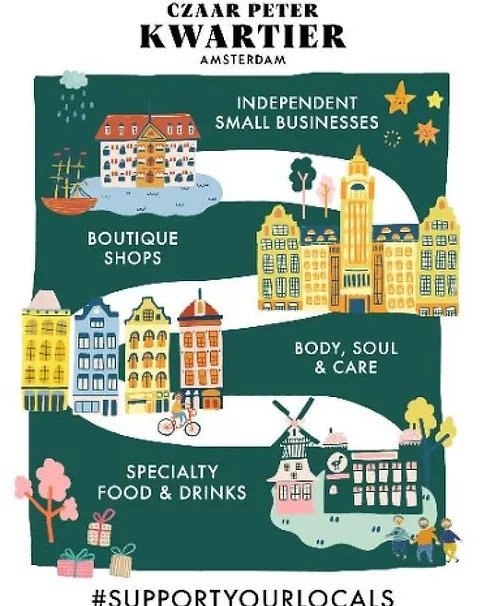
In 2019, we were entrusted by the Amsterdam Municipality to manage a monetary award aimed at applying a “commons” perspective in the neighborhood. This led to studies and activities carried out by students from institutions such as Avans University of Applied Sciences, Amsterdam University of Applied Sciences, and the University of Amsterdam. We also organized and participated in several neighborhood initiatives designed to improve collaboration and foster innovation among residents, introducing the idea of a shared territory encompassing cultural, social, and physical dimensions. 

International Chocolate School

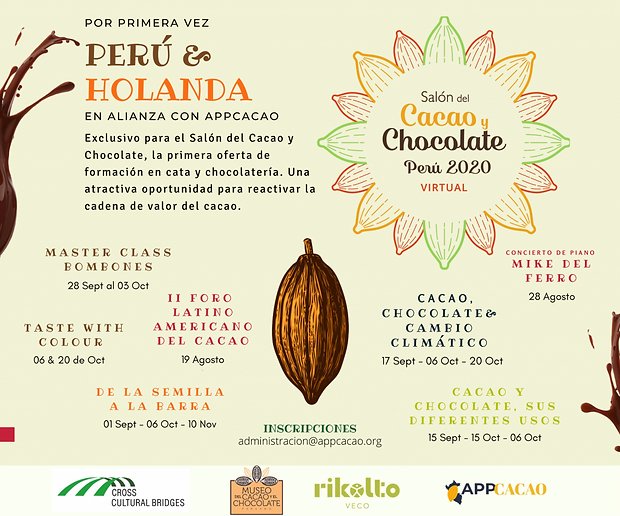
We organize and implement innovative educational activities to reactivate and strengthen cocoa and chocolate food chains. In addition, with our team of experts, we support, co-design, facilitate, and implement short- and long-term initiatives that create and enhance food transitions toward bean-to-bar cacao and chocolate chains. To achieve this, we organize both online and in-person events and provide advice to businesses. We also arrange cacao and chocolate tours in Latin America. 

Regenerating food, culture, and community in Costa Rica’s Osa Peninsula

Los Higuerones is a community cooperative based in the Osa Peninsula, one of the most biodiverse regions on Earth. Since 2020, we’ve been working on strengthening the economic, social, cultural and environmental resilience of Osa locals.

Our main projects include El Mercado Verde (a weekly farmer-led market), Cajas Verdes and Cajas de Abundancia (community food box programs), Manos Cambiadas (volunteer farm work days), and La Antigua Escuela (In-person, hands-on classes, workshops and talks). These initiatives focus on honouring the local traditional culture, promoting the local livelihoods, food sovereignty, transfer of knowledge and practical life skills, and nurture solidarity within the community.

We also host cross-cultural learning experiences where visitors share their skills and learn from local families, creating meaningful exchange and connection. Together with Cross Cultural Bridges, we promote the creation of decentralised organisational models and partnership – rooted in trust, connection to place and community care. Together we weave the fabric of regeneration through connecting our local action with global allies.

Here is the link to our website https://www.higueronescoop.org/